ServicesBattery Storage
Battery Storage in Murphy, TX
A home battery stores the solar power you make by day so you can use it at night or during an outage. We walk you through the chemistry, size and mounting location before anything is ordered, so the system you get matches how your home actually uses power.
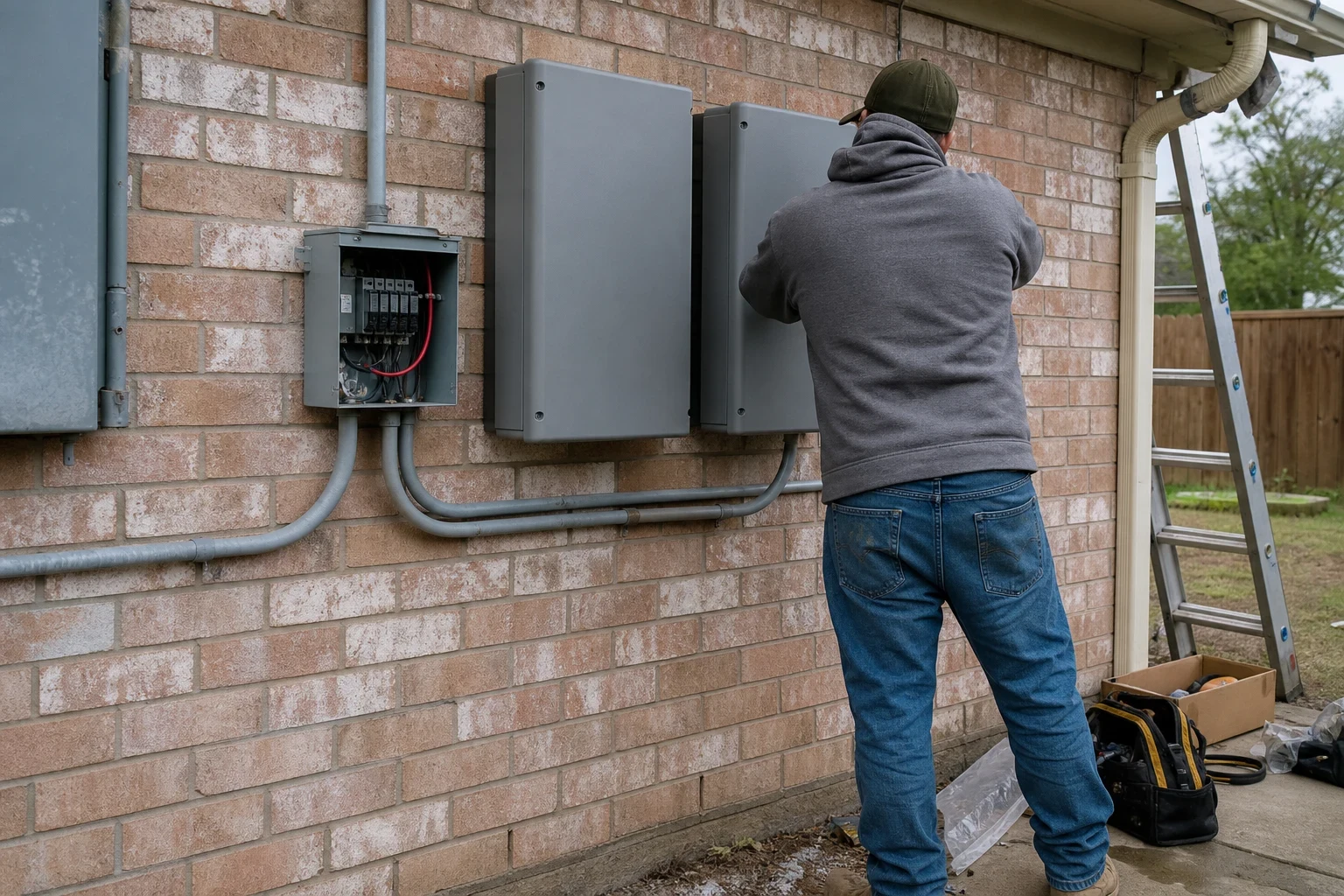
Where stored power fits in your home
Think of the battery as a reservoir between your solar array, your electrical panel and the utility line. Surplus daytime production fills it. After sunset, or when the grid fails, it feeds the circuits you picked in advance.
Storage earns its place if outages are a real disruption for you, if someone in your home relies on powered medical equipment, or if you would rather use more of your own solar than send it back to the utility. It does less for you if your only goal is a lower bill and your utility already credits exported power fairly. We will tell you plainly which group you fall into.
Most of the decision comes down to materials and layout: which cell chemistry, how the battery connects to your panels, and where it is mounted. Each choice has trade-offs, and we explain them in plain terms before you commit.
What our battery storage work includes
- Load review
- We look at your past electric bills and the circuits you care about most, such as the refrigerator, well pump, lights, internet and garage door. That tells us how much storage you need instead of guessing.
- Chemistry recommendation
- Most home batteries today use lithium iron phosphate, which tolerates heat well and holds up over many charge cycles. Some units use nickel manganese cobalt cells, which pack more energy into a smaller case but run warmer. We explain which suits your space.
- AC or DC coupling
- A DC-coupled battery shares an inverter with new panels and loses less energy in conversion. An AC-coupled battery is usually the cleaner way to add storage to an existing solar system. We recommend the one that fits the equipment already on your home.
- Backup panel and transfer equipment
- For partial backup, we move selected circuits to a dedicated critical loads panel. For whole-home backup, we size the battery and gateway to carry the main panel. Either way, the system disconnects from the grid automatically during an outage, as code requires.
- Permit, inspection and utility paperwork
- We pull the electrical permit, meet the inspector and handle the interconnection paperwork with your utility so the system is approved before it is switched on.
Signs a battery is worth a closer look
Outages keep catching you off guard
Summer storms and the occasional hard freeze can leave a neighborhood dark for hours. If you have lost food or comfort to a few of these, stored power covers the gap quietly.
Your solar shuts off when the grid does
Grid-tied panels without storage switch off during an outage for line worker safety. Many owners only learn this the first time the power goes out on a sunny afternoon.
You export a lot and get little back
If your bill shows large exports credited at a low rate, keeping that power for evening use can make more sense than selling it.
Someone at home depends on power
Oxygen concentrators, refrigerated medication and home office equipment all make backup more than a convenience.
You are planning new panels anyway
Adding storage during solar panel installation shares labor, permitting and sometimes the inverter, which is simpler than returning later.
How a battery installation runs
- 1
Site visit and measurements
We inspect your main panel, check the wall space in your garage or along the exterior, and measure clearances. Batteries need room for airflow and service access, and some locations are limited by code.
- 2
Written design and estimate
You get a line-item estimate that lists the battery model, chemistry, capacity, backup panel and permit work. We point out any trade-offs so the choice is yours.
- 3
Installation day
Most residential batteries go in over a single day. We mount the unit on a level base or wall bracket, run conduit neatly along the wall, and protect floors and walkways while we work. Tying into the main panel means a stretch without electricity, so we settle that window with you ahead of time and keep it as short as the work allows.
- 4
Inspection and commissioning
Once the city inspection and utility approval are done, we set how much charge the battery holds back for outages. Then we cut grid power on purpose while you watch, so you can see your backup circuits switch over. Before we leave, we walk you through the monitoring app, where charge levels and usage show up as they happen.
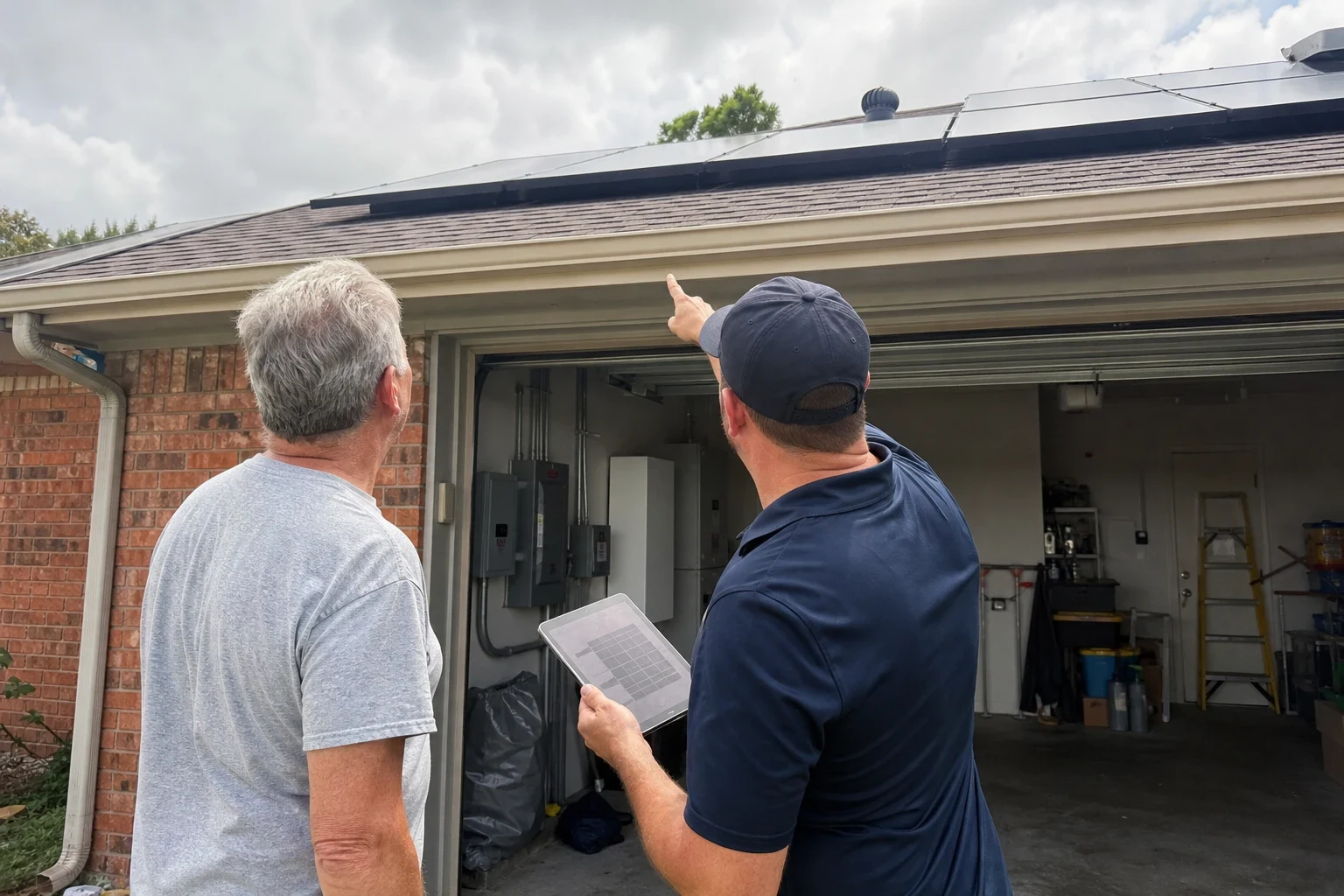
What affects the cost of battery storage
Battery pricing depends far more on how much you want to back up than on brand names. We price each part separately so you can see where the money goes and adjust the plan if you need to.
- Storage capacity
- More kilowatt-hours means more cells and a higher price. Backing up a handful of essential circuits takes far less capacity than running central air through the night.
- Partial or whole-home backup
- A critical loads panel adds some electrical work. Whole-home backup may require a larger gateway and sometimes an electrical panel upgrade.
- Existing equipment
- Pairing with an older inverter can mean AC coupling or added hardware. New systems designed together usually cost less to connect.
- Mounting location
- A short wire run to an interior garage wall is simpler than an exterior mount far from the panel. Long conduit runs and trenching add labor.
Battery storage questions
Something not covered here? (972) 458-5564
How many hours of backup will I actually get?
That comes down to capacity and the load you put on it. One battery feeding a refrigerator, lights, internet and a few outlets will often carry you to morning, and the panels refill it once the sun is up. Central air empties it far quicker, so we size the system around your essentials first.
My solar system is a few years old. Will a battery work with it?
Usually it will. An AC-coupled battery ties in alongside the inverter you have now, so that inverter can stay. During the site visit we look over your equipment and main panel and let you know if any other part needs changing.
Is it safe to keep a battery in the garage?
Lithium iron phosphate batteries are known for stable behavior and resist overheating well. Code still sets rules on placement, clearances and protection from vehicle impact, and we follow them. Garages here get very hot in summer, so we also check that the unit stays within its rated temperature range.
Who will do the electrical work?
Our team holds over 40 solar certificates and licenses, and the same people who design your system install and commission it. That keeps the battery, backup panel and utility connection consistent from start to finish.
Does the battery need maintenance?
Very little. Keep the vents clear and leave the monitoring app connected so you can spot alerts. If a fault ever shows up, our solar repair service can diagnose it.
Plan your battery around your home
Tell us which circuits matter most and where your panels and electrical service are. We will explain the chemistry, size and placement that suit your home, and you will get your quote by phone.