ServicesSolar Repair
Solar Repair in Murphy, TX
When your system makes less power than it should, the cause is usually one part, not the whole array. We test each component, show you what failed and why, and repair it with parts that match what is already on your home.
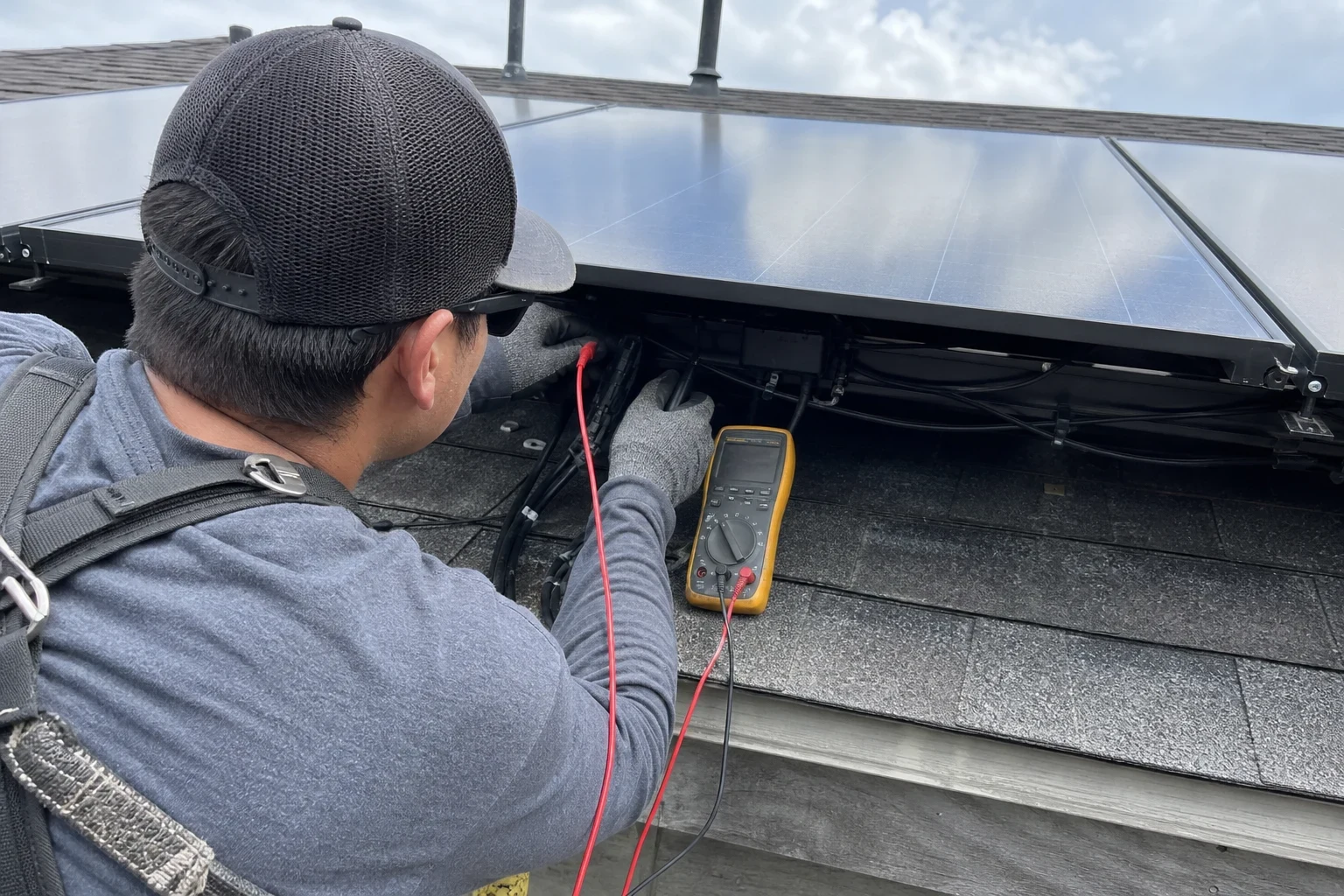
Finding the one part that stopped working
A solar system is a chain of components: panels, connectors, wiring, an inverter or microinverters, a monitoring device and the racking that holds it all. Each is built from different materials, and each ages in its own way. Glass and aluminum frames last for decades. Plastic connectors, cable jackets and inverter electronics wear sooner, especially under long stretches of summer heat.
Our solar repair work starts with measurement, not guesswork. We read your monitoring data, test strings and individual panels, and inspect the hardware on the roof. Then we describe the fault in plain terms and give you a straight answer on whether fixing it is good value or the component is simply worn out.
We hold over 40 solar certificates and licenses, which matters when a repair touches high-voltage DC wiring and the connection to your utility.
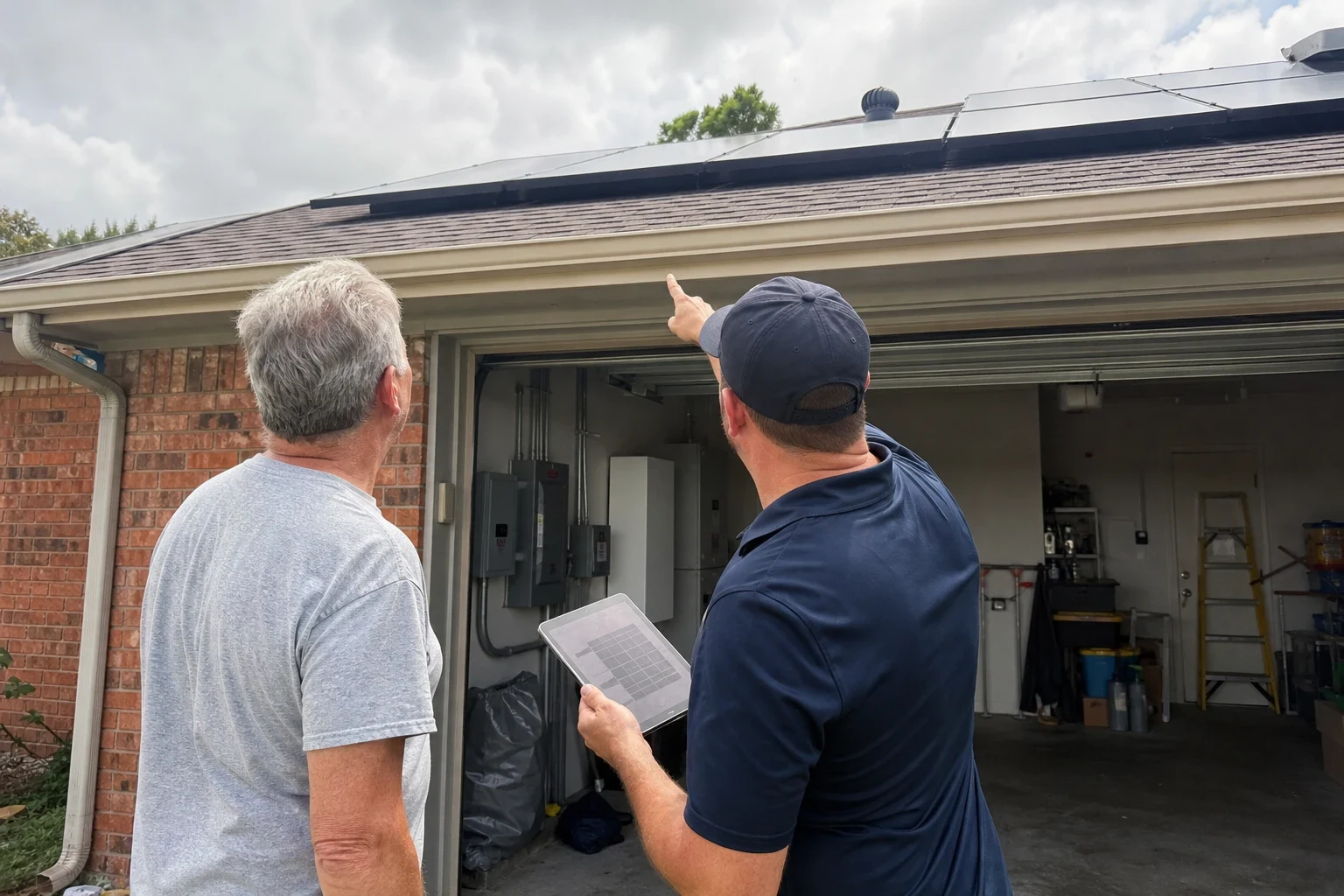
What a repair visit covers
- 01
Inverter diagnosis
String inverters and microinverters fail differently. We read error codes, check input and output readings, and confirm whether the unit needs a reset, a component swap or replacement.
- 02
Connector and wiring checks
Rooftop connectors can loosen, corrode or melt where a poor crimp creates heat. We test continuity, replace damaged connectors with compatible ones and secure loose cable runs so they no longer rub on the roof surface.
- 03
Panel testing
We check each module for cracked glass, browning cells, delaminating backsheets and hot spots. A single weak panel can drag down a whole string.
- 04
Racking and mounting points
We inspect rails, clamps and the seals at each mount. Loose clamps get torqued to spec, and worn sealant around mounting hardware gets cleaned and resealed.
- 05
Monitoring restored
If your app went dark, the cause may be a Wi-Fi change or a failed gateway. We reconnect or replace it so you can see production again.
Questions about Solar Repair?
Call(972) 458-5564Signs your system needs a repair
Production is down from a year ago
Open your monitoring history and compare this month with the same weeks last year. A drop much bigger than normal panel wear, or a sudden fall on bright days, usually points to a failed part.
Warning lights on the inverter
Red or amber lights or an error code on the inverter screen deserve a check, even when the system appears to be running.
A panel reads zero
With microinverters, the monitoring often shows one panel making no power at all. That generally means its microinverter failed or a connection behind it went bad.
Storm damage you can see
North Texas hail can break panel glass or shake wiring loose. If you spot chips, cracks or hanging cables, stay away from the array and get it inspected.
Ceiling stain under the mounts
A stain on the ceiling beneath the array may come from a worn seal at a mount, and we can reseal it.
Higher bills with the same usage
If your electric bill goes up while your habits have not changed, the system may be producing less without any obvious sign.
How a repair visit runs
- 1
A conversation first
On the phone we ask about your system's age, brand and what you have noticed. If you can share monitoring screenshots, we review them before we arrive.
- 2
Testing on site
We shut the system down safely, then test from the inverter out to the panels. We photograph what we find so you can see it too.
- 3
A clear explanation
You get a written breakdown of the fault, the part involved and the repair options, including the trade-offs between a like-for-like part and a newer equivalent.
- 4
Repair and verification
Once you approve, we make the repair, restart the system and confirm production on the monitoring before we leave. We tidy up any packaging or old parts.
What shapes the cost of a solar repair
Most repairs are priced by the part involved and the time it takes to reach and test it. We explain the options in writing before any work begins, so the number never arrives as a surprise.
- Which component failed
- A loose connector is a small fix. A replacement string inverter or a batch of microinverters is a larger one, and the price of the part drives most of the cost.
- Part availability
- Older or discontinued panels and inverters may need a compatible substitute. We explain how a substitute affects output and fit before you decide.
- How hard the fault is to reach
- A steeper roof or a second story calls for more safety gear and setup time. A faulty panel buried deep inside a large array also takes longer, since neighboring modules may need to come off first.
- Warranty coverage
- Many panels and inverters carry manufacturer warranties. If your part is covered, we help you gather the serial numbers and photos the manufacturer asks for.
Common questions before a repair visit
Someone else installed our system. Can you still service it?
Yes. Almost every home system uses common panels, inverters and connectors, and we work on the well-known brands. We ask about your equipment before we come so we bring the right testing tools.
Should I fix an older system or replace it?
Fixing it is often the better call, because panels usually outlive the electronics connected to them. When several parts are failing together or the inverter design is dated, we show the cost of each route side by side. If replacing makes more sense, our solar panel installation page describes how that job goes.
Hail damaged my panels. Will my insurance pay for repairs?
Plenty of homeowner policies cover storm damage to panels, but it depends on yours. We record the damage in photos and a written report you can hand to your adjuster. Whether it is covered is up to the adjuster and your insurer.
Might dirt explain why my output fell?
Dust, pollen and droppings do lower output, though usually only a little. A steep or sudden drop tends to be electrical. Our testing sorts out which it is, and if buildup is to blame, our panel cleaning service takes care of it.
Can I check the panels on my own safely?
Reading the inverter screen and the monitoring app is safe. Stay off the roof and away from the wiring, since panels make voltage any time light reaches them, even when the inverter is off.
Let's find out what changed
Tell us what your monitoring shows and what you have noticed. We will talk through the likely causes and set a time to test the system at your home in Murphy or nearby.