ServicesRoof-Mounted Solar
Roof-Mounted Solar in Murphy, TX
We design roof-mounted solar around what your roof is actually made of. Shingle, metal or tile each takes a different mount, and each mount seals differently. We explain those choices, show you how the array and conduit will look, and install it with care for the roof underneath.
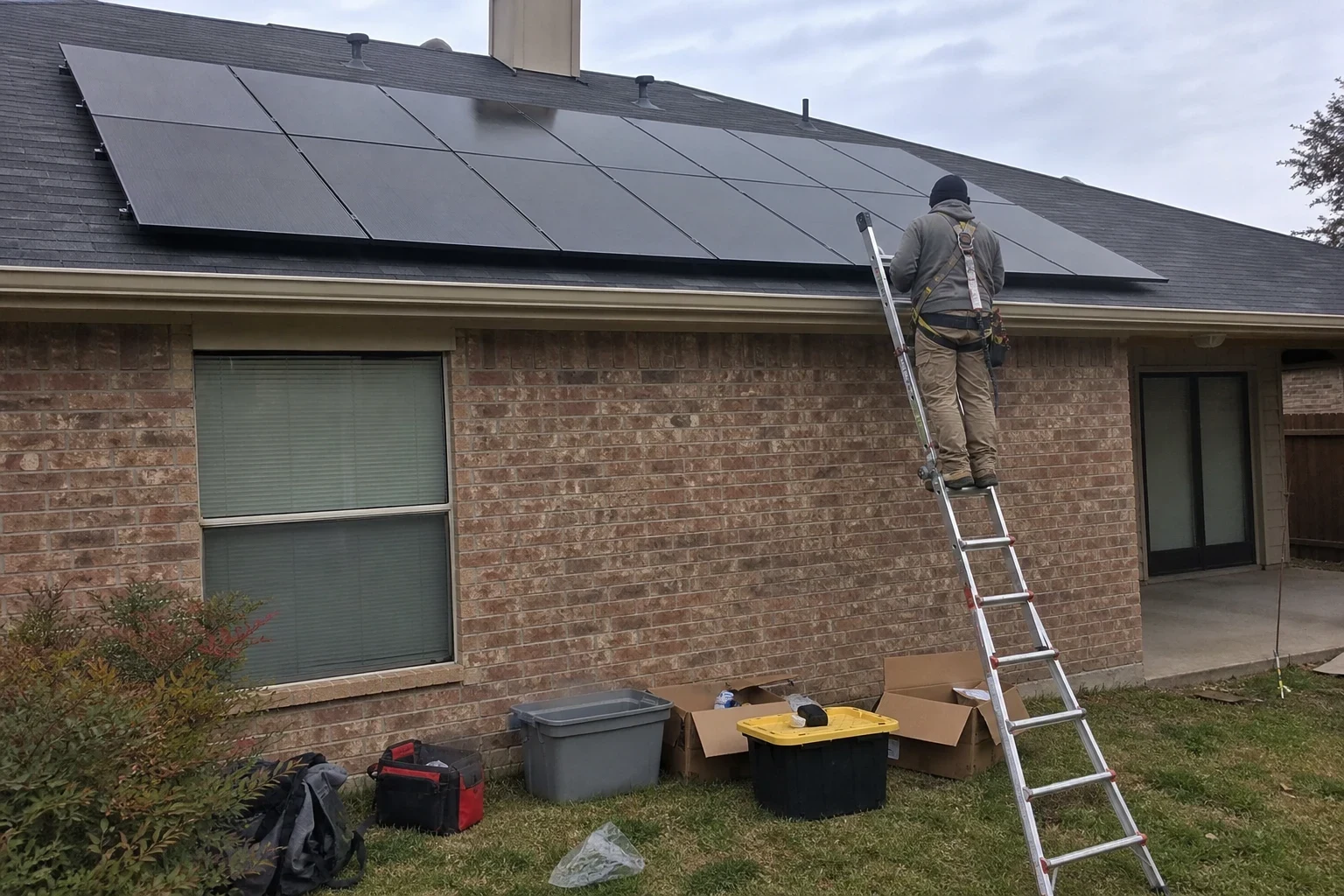
What roof-mounted solar involves
Most homes put their panels on the roof because that is where the open, south- and west-facing surface is. The panels themselves get most of the attention, but the long-term result depends just as much on the parts you rarely see: the attachments that tie into your rafters, the flashing that keeps water out, and the rails that carry the load through wind and hail season.
This page covers the roof side of the work. If you are still comparing panel brands, inverter types or system size, our Solar Panel Installation page goes deeper on those. Here we focus on how the array meets your roof and what that means for leaks, appearance and service later on.
We do not do roofing work. If your roof is near the end of its life, we will tell you plainly and suggest you have it replaced before panels go on, since removing and reinstalling an array later adds real cost.
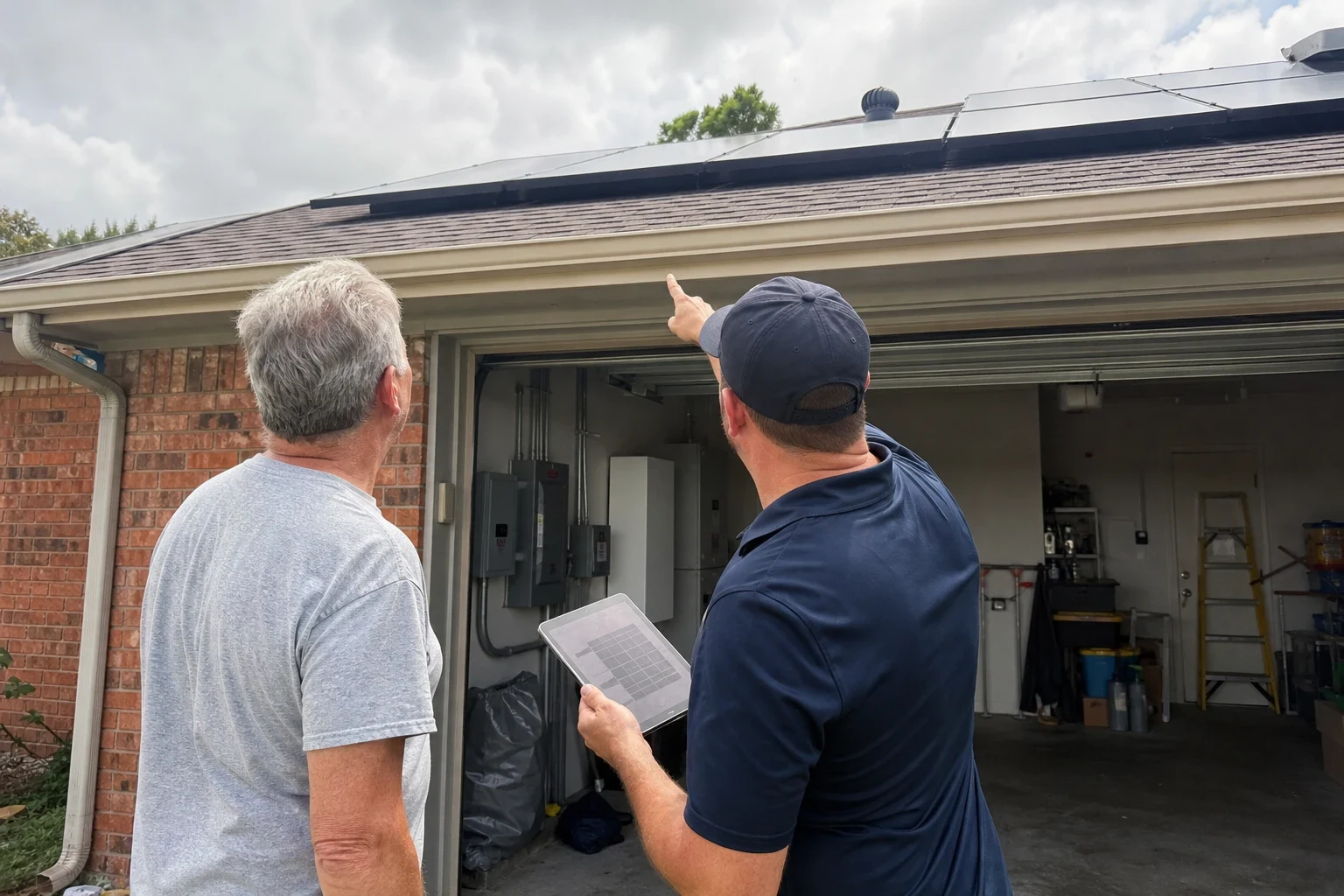
What the work includes
- 01
A roof check before design
We look at the decking, rafter spacing, shingle condition and pitch. Soft spots, curled shingles or brittle tile change the plan, and you will see photos of anything we find.
- 02
Mounts matched to the roof material
On composition shingle we use flashed attachments lagged into rafters. Standing seam metal usually takes clamps on the seams, which means no holes at all. Tile roofs need hooks with replacement flashing tiles, a slower and more careful job.
- 03
Aluminum racking and stainless hardware
Anodized aluminum rails resist corrosion and stay light on the roof. Stainless fasteners avoid the rust streaks that cheaper hardware leaves on shingles after a few wet springs.
- 04
Finish details
Black rails and end caps sit flush with all-black panels for a lower profile. A critter guard around the array edge keeps birds and squirrels from nesting underneath and chewing wire.
- 05
Planned conduit and wire routing
Where the attic allows, we run conduit inside so less shows on the roof face. Exterior runs follow roof lines and can be painted to match trim.
Questions about Roof-Mounted Solar?
Call(972) 458-5564When roof-mounted solar is the right fit
Open, unshaded roof planes
South, west and east faces with little tree cover produce well. North faces rarely earn their place.
A roof with years left in it
Panels typically stay up for decades. Pairing them with a roof that has plenty of life remaining avoids a costly removal and reinstall.
Limited yard space
Most lots here leave little room for a ground array without giving up the backyard. The roof uses space you already have.
You care how it looks from the street
A roof array can be laid out in tidy, symmetrical blocks with matching rails and hidden conduit, so it reads as part of the house rather than an add-on.
How the job runs
- 1
Phone conversation and site visit
We talk through your electric use and goals by phone, then visit to measure the roof, check the attic and photograph the main electrical panel.
- 2
Design, materials and approvals
You get a layout showing panel placement, mount type and conduit path, with the material options and their trade-offs laid out. We pull the city permit and help with HOA paperwork if your neighborhood requires it.
- 3
Install day
The crew sets attachments into rafters, seals and flashes each one, then mounts rails and panels. Most homes are done in one to three days depending on size and roof type, and we clear screws, wire scraps and packaging from the yard each evening.
- 4
Sign-off and first power
Once the city inspector has signed off and the utility gives permission to operate, we energize the array. Before we leave, we sit down with you and go through the monitoring app so you know what normal output looks like.
What moves the price
Roof-mounted solar is priced by the system as a whole, but the roof itself drives a fair share of the labor. Two arrays with the same panel count can differ noticeably once pitch, material and access come into it. We walk you through each line so the choices are clear.
- Roof material
- Shingle mounts go in fastest. Standing seam clamps are quick and leave no holes. Tile takes the most time because tiles must be lifted, cut or replaced around each hook.
- Pitch, height and layout
- Steep or two-story roofs need more safety setup. Arrays split across several roof faces need more rails, more wiring and sometimes extra inverter capacity.
- Panel and finish choices
- All-black panels and black racking cost more than silver-frame options. Panels with stronger hail ratings, worth weighing in North Texas, also sit at the higher end.
- Breaker box capacity
- Some homes have a breaker box that is dated or has no open slots, and it has to be replaced before solar can connect safely. We look at yours during the first visit, so any upgrade appears in the estimate instead of surprising you later.
Questions about roof-mounted solar
Will putting panels on my roof cause leaks?
Every penetration is a possible leak point, which is why the attachment matters. We lag into rafters, seal the hole and slide flashing under the shingle course above so water sheds over it. On standing seam metal we usually avoid penetrations altogether.
What happens to the panels in a hailstorm?
Panel glass is tempered and goes through standardized impact testing, and certain models are rated for larger hailstones than others. A severe storm can still crack any panel. We show you the ratings on the models we offer and suggest checking that your homeowner's policy lists the array.
Does my roof need to be replaced first?
Not always. If the shingles are in good shape with many years left, panels can go on as is. If the roof is close to worn out, we recommend having your roofer replace it first, since we do not do roofing ourselves.
Who will be working on my roof?
Our installers hold the training the work calls for, and as a company we carry over 40 solar certificates and licenses. You will know the crew lead's plan before anyone climbs a ladder.
Can panels be removed later?
Yes. Racking is bolted, not glued, so an array can come off for future roof work. Each removal and reinstall is a separate job with its own cost, which is why roof condition matters at the start.
See what your roof can carry
We serve Murphy and nearby towns including Wylie, Sachse, Parker and Plano. A short conversation tells us your roof type and goals, and we set up a visit from there.