ServicesSolar Panel Installation
Solar Panel Installation in Murphy
We design and install rooftop solar systems for your home, and we walk you through the panel, racking and inverter options first. You see what each one costs you in output, looks and long-term upkeep, then choose with the full picture in front of you.
A system built from parts you understand
Most solar quotes list a panel model and a wattage and leave it there. We think the parts deserve a fuller explanation, because they decide how the system performs on a hot August afternoon and how it looks from the street for the next couple of decades.
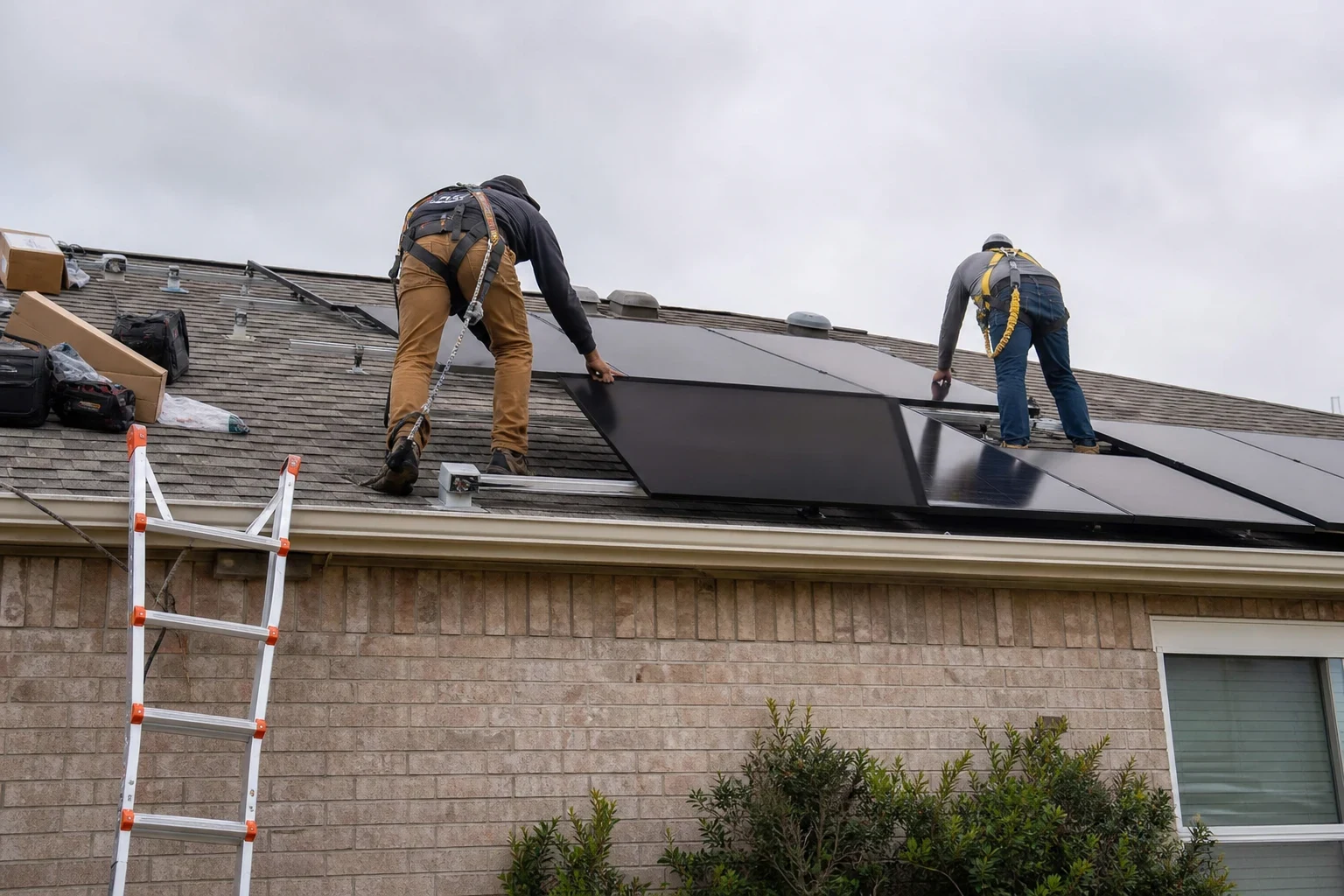
Our solar panel installation covers the full job: sizing the system to your actual electric use, choosing the hardware, permitting, mounting, wiring and connecting to the grid. Between us we carry over 40 solar certificates and licenses. You notice it in the quiet details, such as a carefully sealed roof penetration or conduit tucked neatly along the eaves.
If your roof needs specific mounting advice, our Roof-Mounted Solar page goes deeper into racking and attachment.
What the installation includes
- Usage-based system sizing
- We start from twelve months of your electric bills, not a rule of thumb. That keeps the system from being oversized for a home that uses less than average, or undersized for one with a pool pump and two refrigerators.
- Panel selection
- Most homes suit monocrystalline panels, and many now use N-type cells, which lose less output as temperatures climb. We compare all-black panels against silver-frame models on appearance and efficiency, and we look at each panel's hail test rating.
- Inverter choice
- A single string inverter is simple and economical on an unshaded, single-plane roof. Microinverters or optimizers carry a higher price, but each panel then works on its own, so shade on one module does not pull down the whole row. That independence matters on roofs with dormers, chimneys or mature trees.
- Racking and flashing
- Aluminum rails are fixed to the rafters with flashed mounts that sit under the shingle course, so water sheds over the attachment rather than into it.
- Permits and utility approval
- We file the permit application with the city, book the inspector's visit and handle the connection paperwork your utility requires. The approvals move forward without you having to follow up on each one.
When solar is the right call for your home
Summer bills that keep climbing
If your cooling season drives the largest bills of the year, solar output lines up well with that demand, since panels produce the most during long, bright summer days.
A roof with good years ahead
Panels are a long-term fixture. A roof with plenty of life left is the ideal base, and we will tell you plainly if yours is close to needing replacement so you can address it first.
South or west-facing roof planes
These orientations catch the most sun. East-facing planes still work, with somewhat lower output we will show you in the design.
Plans to stay put
Solar returns its value over years. If you expect to live in your home for a good while, the math tends to favor it.
How an installation unfolds
- 1
A call about your bills
On the phone we cover your home, your electric bills and what you expect from solar. You tell us your usage, and we point out which material choices deserve a look for your roof.
- 2
Home visit and system plan
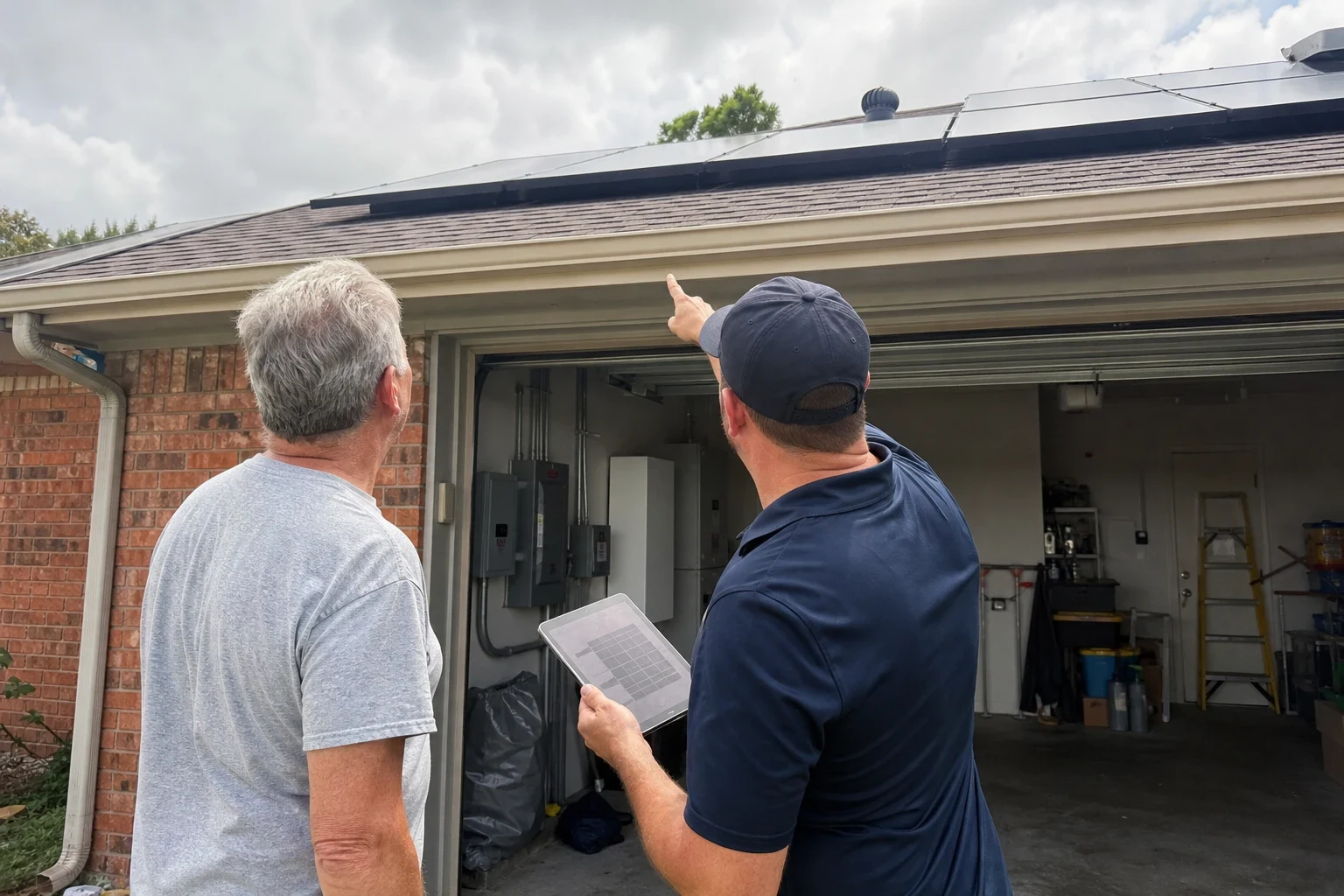
We measure the roof, check the rafters and the attic if we can get in, study the shade and look over your main electrical panel. You get a written plan with the panel layout, the chosen hardware and estimated yearly production.
- 3
Permits
When you approve the design, we apply for the city permit and request your utility's approval. This is usually the longest stretch of waiting in the project.
- 4
Install day
On a typical house, the crew mounts and wires the array in one or two days. We cover the beds and shrubs under the roof edge with tarps, keep wiring hidden where the layout permits, and clear scraps and packaging from the yard before leaving.
- 5
Approval and power-on
First the city inspector approves the work, then your utility clears the system to connect. Once both are done, we turn it on and show you the monitoring app so you can watch production each day.
Where the money goes in a solar quote
Houses that look alike from the curb can still receive quite different numbers. The gap usually traces back to how large the system is, which hardware you pick and how much preparation the roof and breaker box need. Our written estimate breaks each of these out line by line.
- System size
- The number of panels follows your annual electric use. More panels mean more hardware and more labor.
- Panel and inverter tier
- N-type all-black panels and microinverters cost more than standard modules on a string inverter. The premium buys heat tolerance, shade handling or appearance, and we will tell you when it is not worth paying for.
- Roof layout
- A single open plane is quick to work on. Multiple planes, steep pitches or tile roofing add time and mounting hardware.
- Your main breaker box
- A box that is aging or has no open space may not have room for a solar breaker, and replacing it adds to the job. We check for this at the site visit, so it appears on your written estimate instead of surprising you on install day.
Questions about solar panel installation
Something not covered here? (972) 458-5564
How do panels hold up to North Texas hail?
Modern panels use tempered glass and are tested against ice balls fired at speed. We favor models with strong hail ratings and can show you the test data. Very large hail can still crack glass, so it is worth confirming how your homeowner's policy treats rooftop solar.
Are all-black panels worth it?
They look cleaner against a dark shingle roof, which many homeowners care about. They can run slightly warmer and sometimes cost a little more. We show you both side by side so you can decide what matters more to you.
Should I choose microinverters or a string inverter?
It depends on shading and roof shape. On a clear, single-plane roof a string inverter performs well at lower cost. With partial shade or several roof faces, microinverters usually earn their extra cost.
Do I need a battery with my panels?
No, a grid-tied system works without one. A battery adds backup during outages and lets you use more of your own solar power in the evening. Our Battery Storage page covers that choice, and we can add one now or later.
How long until the system is running?
Our crew typically finishes the physical work in a day or two. Most of the waiting happens on either side of that, while the city reviews the permit, the inspector visits and your utility approves the connection. We let you know as each of those steps clears.
Start with a conversation about materials
Tell us about your home and your electric bills. We will explain the panel and inverter options that suit it and what each one means for the system you live with.